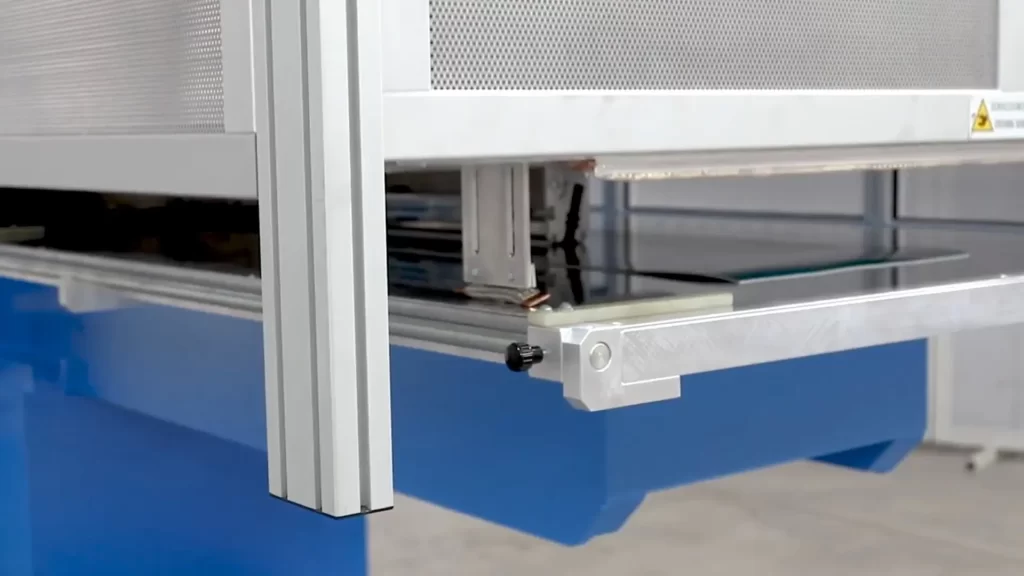
High-frequency welding machines are often seen as long-term investments. In many factories, the same equipment runs for years, sometimes decades. But at a certain point, an old or poorly suited machine can stop being an asset and start becoming a hidden constraint on quality, efficiency, and growth. Choose to replace or upgrade your HF welding machine is not just a technical decision, it is a strategic one.
Signs your current machine is a limitation
Some warning signs are easy to spot, others are more subtle. The common factor is that they slowly erode profitability and competitiveness.
Frequent breakdowns and long downtime are an obvious signal. If the machine stops often, requires constant adjustments, or depends on obsolete spare parts, production planning becomes difficult and costs rise.
Another sign is increasing scrap and rework. When weld quality becomes inconsistent, more pieces are rejected or need manual intervention. This affects not only material costs but also delivery times and customer trust.
If your current machine cannot keep up with new orders or faster cycle requirements, it is also a clear indicator. A process that worked for small batches may no longer be suitable when volumes increase or product ranges expand.
Finally, difficulty in changing product or format without losing quality suggests that the equipment is too rigid for your current needs. In flexible manufacturing, the ability to adapt quickly is essential.
Why patching an old HF machine costs more than you think
Many manufacturers try to extend the life of an old machine by adding fixes, workarounds, or manual steps. While this can seem economical in the short term, it often creates hidden costs.
More time spent on setup and adjustment means less time for actual production. Higher dependency on experienced operators increases risk when staff changes. And inconsistent quality can lead to complaints, returns, or lost opportunities.
In some cases, the total cost of maintaining an outdated process exceeds the investment in a new, better-suited solution.
Why a custom solution can make the difference
A machine designed around your specific application can address many of these issues from the start. Instead of adapting your product to a standard machine, the equipment is configured to match your material, joint geometry, and production targets.
This approach helps stabilize the process, reduce variability, and improve repeatability. It also makes it easier to integrate the welding step into a larger production line, whether you need semi-automation or full integration.
For manufacturers facing growth, new product development, or stricter quality requirements, a custom HF welding machine can be the enabling factor that turns a limiting process into a competitive advantage.
When to consider an upgrade
An upgrade or replacement makes sense when:
- your current machine cannot meet quality or throughput targets
- maintenance costs and downtime are rising
- you are planning new products or higher volumes
- you want to reduce dependency on manual adjustments and operator skill
In these situations, investing in a more suitable HF welding solution can improve not only the welding step, but the overall efficiency of your production.